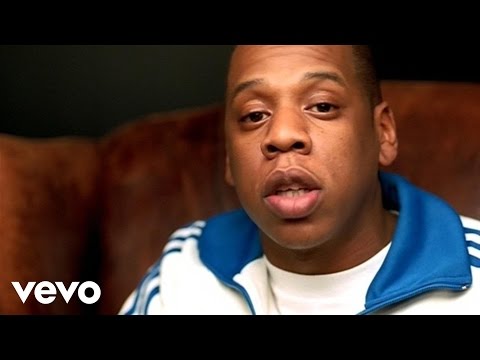
Jay-Z – The Story of O.J. (Official Video) | Powerful Social Commentary is one of Jay-Z’s most important modern works because it turns race, class, wealth, and identity into a direct cultural critique. The song remains highly relevant in 2026 because its core questions about Black identity, financial power, and social perception still connect to public debate, education, business, and media literacy
.
Released in 2017 on 4:44, “The Story of O.J.” is a sharp, stripped-down track produced by Jay-Z and No I.D., with the music video premiering on Jay-Z’s Vevo channel and directed by Jay-Z and Mark Romanek. The record is built around a sample of Nina Simone’s “Four Women,” which gives the song a serious historical weight and links it to a broader tradition of Black artistic resistance.
The official video uses a minimalist, animated style that visually reinforces the song’s message about stereotypes, money, and representation. Rather than presenting luxury or spectacle, it uses bold imagery and a satirical framework to push the listener toward reflection, making the video feel more like a cultural essay than a typical rap clip.
Positive Impact
The song’s strongest contribution is its clarity. Jay-Z uses the story of O.J. Simpson as a starting point to show how race remains a defining factor in American life, even when wealth and fame are present. That message gives the track serious value in classrooms, journalism, cultural criticism, and conversations about systemic inequality.
It also offers practical social insight by emphasizing financial literacy and generational wealth. That matters because music with this kind of message can influence how people think about ownership, investment, family wealth, and long-term stability, especially in communities where financial access has historically been limited. In that sense, the song contributes not only to entertainment, but also to public education and self-empowerment.
For the music and media industries, the track is a strong example of how a major artist can combine art, politics, and branding without losing audience attention. It supports work across songwriting, production, animation, video direction, editorial commentary, streaming distribution, and music journalism, while showing that socially conscious content can still be commercially and culturally powerful.
Critical Reading
A critical reading should also recognize that the song can feel didactic. Its message is strong, but at times it is delivered so directly that some listeners may feel the artistry is serving the lesson more than the other way around. That does not weaken the song’s importance, but it does mean the track functions partly as a manifesto rather than a purely open-ended artistic statement.
Another negative angle is that the song’s focus on wealth and ownership may sound empowering while still centering a very elite perspective. Jay-Z is not speaking from the position of the average worker, and the track sometimes risks turning structural critique into a success story about individual escape. That makes it powerful, but also incomplete.
There is also a serious social tension in the way the song repeatedly returns to Black identity and public perception. It is effective because it exposes a reality that many people ignore, but it also shows how exhausting it is that wealth cannot fully protect Black people from racial classification. The track is honest about that limitation, but the honesty itself is painful.
Work And Society
The real value of “The Story of O.J.” extends beyond music. In education, it can be used to discuss race, media, history, economics, and identity all at once, which makes it unusually useful as a cultural teaching tool. In journalism and public policy, it provides a compact way to talk about the gap between formal success and lived racial reality.
For workers in the creative economy, the song demonstrates the market value of intelligent, message-driven art. It shows that labels, platforms, and media companies can benefit from work that is both commercially viable and intellectually serious, which encourages more investment in high-quality storytelling, design, and commentary. That is a real contribution to the progress of creative labor.
The song’s social contribution is perhaps even more important. By linking personal finance to racial identity and historical memory, it pushes listeners to think about power in more than one dimension. That kind of perspective can shape better decision-making in households, classrooms, communities, and businesses because it reminds people that success is not only about income, but also about ownership, legacy, and access.
Updated Relevance
As of 2026, the song remains highly current because conversations about race, wealth gaps, and representation have not disappeared. In fact, the track has become even more useful in an era when people are paying closer attention to financial literacy, generational inequality, and how media frames Black success.
It also continues to matter because the video format itself has aged well. Its stylized simplicity keeps the message focused, and that makes it easy to revisit in classrooms, essays, playlists, and social discussion without losing relevance. The song’s endurance proves that socially conscious hip-hop can have long-term cultural value when it is built on strong writing and a clear point of view.
Professional Caption
Jay-Z’s “The Story of O.J.” is a powerful social commentary that confronts race, money, and identity with unusual precision and force. Its official video strengthens that message through striking visual metaphor, making the song one of the clearest modern examples of hip-hop as public critique.

![Numb / Encore [Live] (Official Music Video) [4K Upgrade] | Linkin Park x JAY-Z Legendary Crossover Performance](https://sirenbeauties.store/wp-content/uploads/2026/07/numb-encore-live-official-music-video-4k-upgrade-linkin-park-x-jay-z-legendary-crossover-performance.jpg)